Module 1Knowledge of Coffee
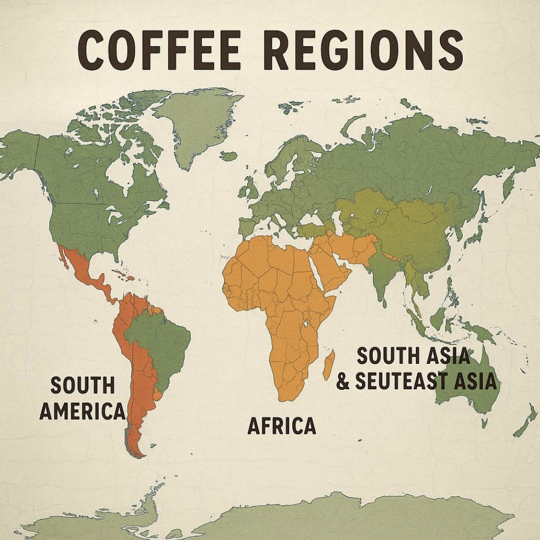
Coffee Regions
Your coffee has been on a long journey before finding its way to you. Many people have been involved in the production of the coffee beans. You are the last and most important person in this production line before the coffee is served to your customer.
All coffee grows in a band between the Tropics of Cancer and Capricorn. There are 70 coffee growing countries, the most widely known are shown in the map below including Brazil, accounting for 33% of the World’s annual harvest and Ethiopia, where coffee was first discovered, as rumour has it by “Kaldi” a goat herder!
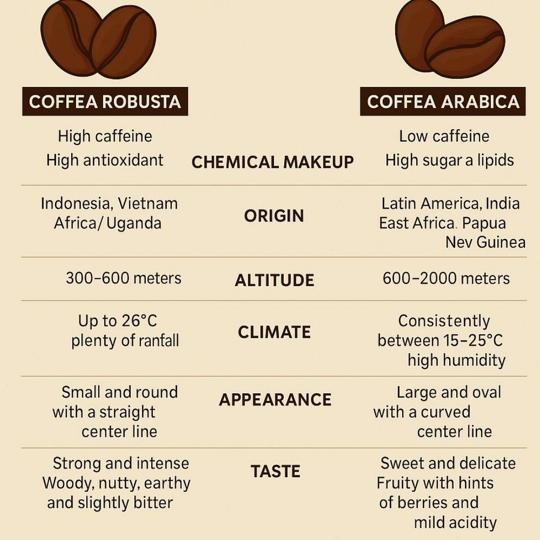
Coffee Species
Of the 73 species of coffee tree, only two are cultivated commercially – Arabica and Robusta.
Coffee trees grow on mountain slopes where they prefer the shade, and it is from the trees seeds that we make our coffee. The fruit is very similar in appearance to the Cherries we eat.
The difference is that we eat the flesh of Cherries and discard the pip or seed, whereas with coffee (which is also called a cherry when it is still on the tree), we discard the flesh or pulp and keep the seeds. There are two seeds in each cherry, and it is these that are dried, cleaned and roasted ready for making coffee.
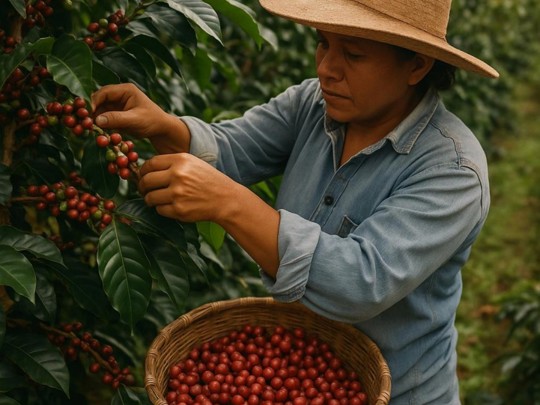
The Steps to Coffee
Harvesting - Cherries ripen between 6- 9 months and change from green to red when they are ready to pick. Some countries pick mechanically after which the cherries need to be sorted and separated from twigs etc. In other countries only the ripe cherries are picked by hand. Typically, a farm hand would pick up to 100kgs and in Colombia a good day’s wage is the equivalent of £15 per day.
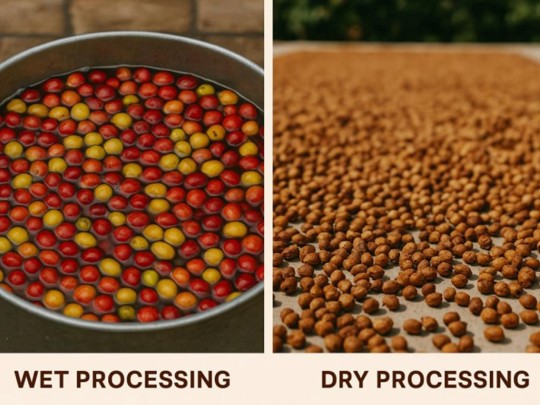
Processing - This is the method of removing the pulp from the cherries and it can be done in one of two ways:-
Dry “natural” method - usually used in hotter drier countries and where water is not so readily available. The cherries are spread out to dry on large concrete or matting beds. They are then raked regularly to assist in uniform drying and to prevent fermentation.
Wet “washed” method - within 24 hours of picking, the cherries are fed through a machine called a “Pulper” which removes the pulp. The remaining beans are then washed to remove the slimy mucilage which covers the be
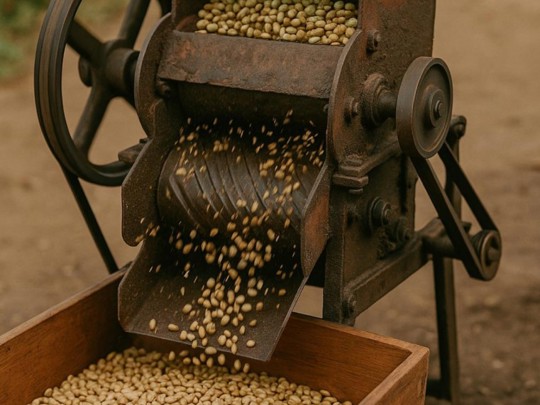
Drying the beans - After processing, the beans are still covered in a fine skin called “parchment” which is similar to that on roasted peanuts. The parchment is dried in the sunshine, or by mechanical driers to retain approximately 11% moisture in the beans, dry enough for them to be stored without damage. The drying takes between 1-2 weeks.
Hulling - The process of Hulling removes the dried “parchment” (now called “Hull”) from Wet processed beans and the dried-up pulp (now called “husk”) from Dry processed beans.
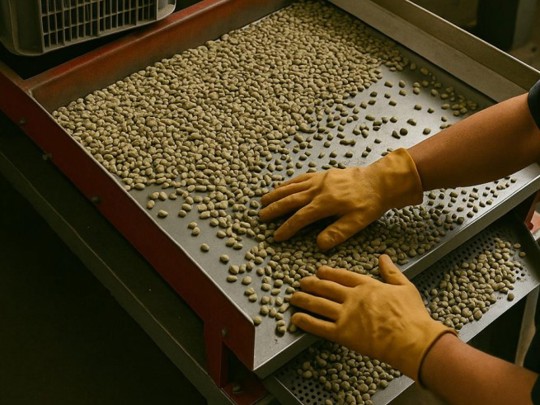
Grading and Sorting
The beans now called “Green Beans” are either sorted by hand for size and imperfections or are mechanically shaken through a series of screens and then visually checked electronically for unhulled or fermented “black” beans.
Exporting
Approximately 7 million tonnes of green coffee is produced each year. The “Green Beans” are bagged in hessian sacks up to 70kg and taken to Ports where they are loaded into 40ft Shipping Containers ready for shipment around the World including Felixstowe for Café du Monde, where the containers are collected and taken to our Roasters.
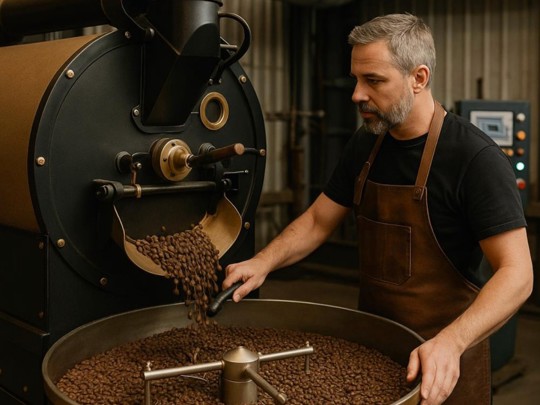
Roasting - The green beans are roasted at temperatures between 200-250oC for 10-20 minutes during which they lose 15-20% of their weight. Café du Monde beans are specially roasted in a “fluid Bed” roaster – one of only four in the UK. This convection turbo roasting provides us with evenly roasted beans which have a very high extraction quality. Once roasted our espresso beans are packed in 1kg foil bags fitted with a one-way valve to allow the beans to breath and to guarantee their freshness.
Decaffeinated Coffee - green beans are decaffeinated prior to roasting, by one of three methods: -
Traditional - the beans are soaked in water including organic solvents to dissolve the caffeine.
CO2 - the beans are placed in a chamber of liquid CO2 which absorbs and removes the caffeine.
Swiss Water Method - the beans are flushed by pure mountain water through charcoal filters which collect the caffeine. Mostly produced in Canada, this is the most eco-friendly method of decaffeinating but is also the most expensive. In the UK approximately 5% of coffee consumed is decaffeinated.
Ready to test your knowledge?
Begin your assessment with Module 1 of our barista knowledge training course.
Module 1 QuizKnowledge of Coffee
{{ step + 1 }}. {{ currentQuestion.question }}
You have passed the quiz
Congratulations on passing Module 1! Next, you'll dive into Module 2, where you'll explore the inner workings of an espresso machine and grinder, and learn the essential cleaning techniques.
Back to modules list Next Module